
Daily Bread: Learning to Trust God One Day at a Time | Matthew 6:11
Daily Bread: Learning to Trust God One Day at a Time
Most of us would rather have tomorrow already in the bank than depend on a promise we cannot see. Jesus teaches us to pray, “Give us today our daily bread,” because our Father meets real people with real needs and calls us back to His hand one day at a time.
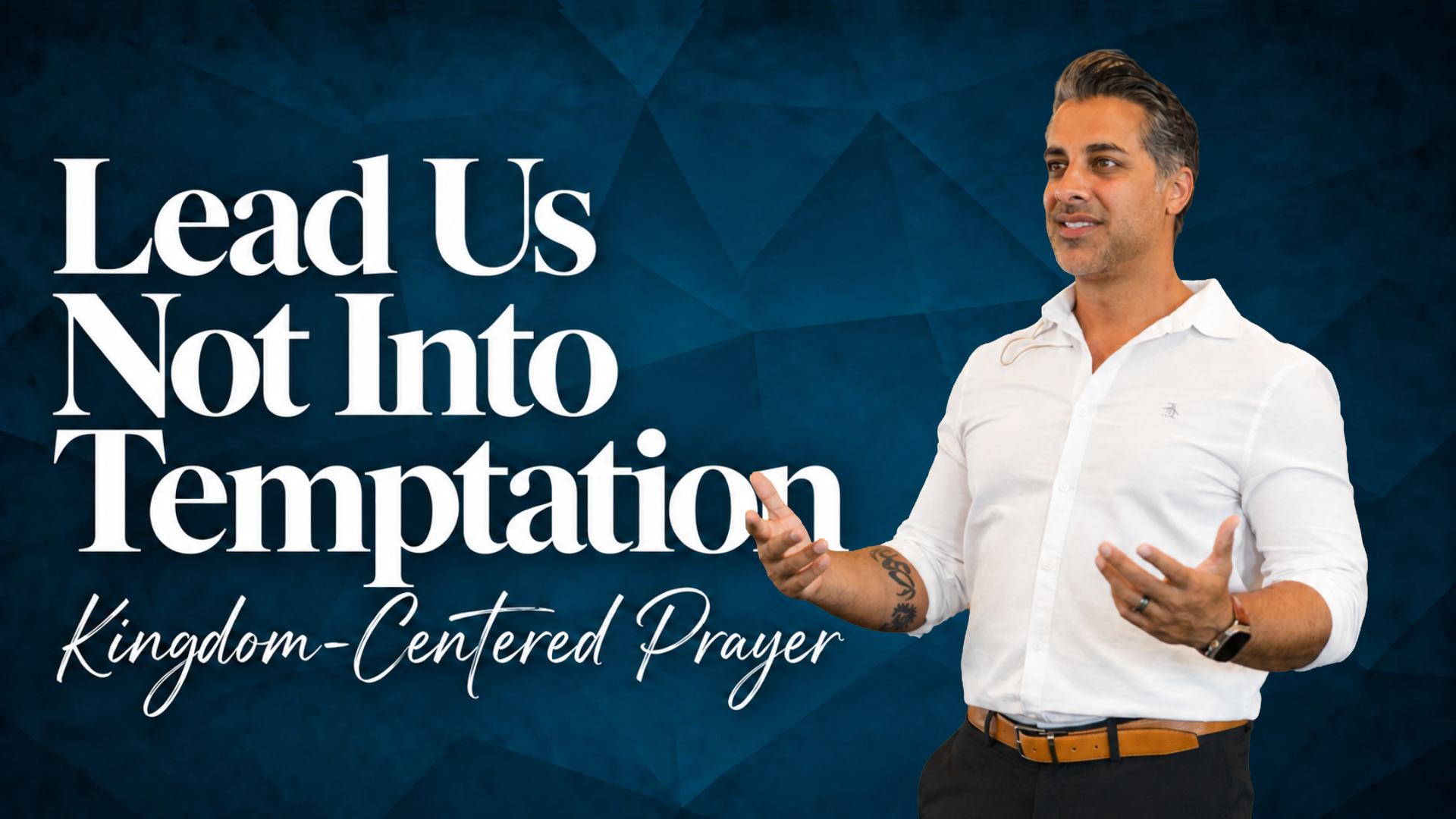
Pastor Rajiv Khatri continues the Kingdom-Centered Prayer series at Belvedere Church, a Christ-centered West Palm Beach church, by opening Matthew 6:11. Bread means more than food. It includes the work, health, shelter, friends, church family, mercy, and grace God gives to sustain us.
The trouble begins when we measure our bread against someone else’s or turn God’s gifts into independence from God. Israel received manna each morning yet missed Egypt’s garlic. We build security through savings, work, and planning, then ask those tools to do what only our Father can do.
At the cross, the only man who deserved to be fed said, “I am thirsty,” and received vinegar. The Father gave His Son for us, so we can trust that He will not withhold anything we ultimately need. Daily bread is a standing appointment with the Giver.
Key Takeaways
Daily bread includes everything God gives to sustain life. Food, work, health, shelter, friendship, church, mercy, and grace all come from His hand.
Jesus teaches us to pray “Give us,” not “Give me.” God often puts extra bread in your hands so you can become part of His answer for someone else.
Hard work is not a failure of faith. Israel gathered the manna God provided. Work, skill, opportunity, and the strength to get up all remain gifts from God.
Comparison makes today’s bread feel small. Nothing in your hands has to change for envy to steal your gratitude.
Plenty can test your heart more than the desert. Deuteronomy 8 warns that full houses and growing wealth can make us forget the One who gave us the ability to produce.
Planning is wise, but it cannot promise tomorrow. Save, budget, and prepare without asking money to carry the weight that belongs to God.
Daily dependence keeps bringing you back to the Giver. You do not graduate from needing your Father.
The cross settles the question of God’s generosity. The Father did not spare His own Son, and He will not withhold what He knows you ultimately need.
Contentment grows when you see whose hand your provision came from. Your Father knows what your today needs and gives grace for this day.


Closing Application
Thank God for one ordinary provision you stopped seeing: the body that got out of bed, the work in your hands, the roof over you, the friend who answered the phone, or the church family beside you. Trace the gift back to your Father.
Name the place where comparison has made your bread feel small. Your provision did not shrink when someone else received a raise, remodeled a kitchen, or posted a picture from a boat. Ask God to restore gratitude for what He placed in your hands today.
Plan, save, and budget. Use those tools without asking them to become your god. A number in an account cannot promise tomorrow or carry the weight of your soul. Your Father gives mercy and grace for today, then meets you again tomorrow.
Look for someone whose prayer God may answer through you. Jesus taught us to pray, “Give us our daily bread.” Extra bread rarely ends with your own stomach.
Come back to the Giver each morning. Pray, “Father, give us today our daily bread.” The Father who gave His Son will give everything He knows you ultimately need.
• Transcript: Pastor Rajiv Khatri
Daily Bread
Matthew 6:11 | Edited Transcript with Section Subtitles
West Palm Beach, FL Church
Give Us Today Our Daily Bread
Open your Bible to Matthew 6. We are in verse 11 this morning.
Church, we have been in the Lord’s Prayer for five weeks. Each week we have seen how kingdom-centered and God-focused this prayer is. Hallowed be God’s name. God’s kingdom come. God’s will be done on earth as it is in heaven.
Our sovereign, all-powerful, faithful, unchanging, majestic God of heaven is also our Father. We are His adopted children. We have prayed for His name to become the most sacred name in us. We have prayed that we would love His will more than our own.
We have prayed for eternity, for His kingdom that has begun and will come in fullness when Jesus returns. He will make this broken world right. He will make all things new.
Then Jesus gives us the next line: “Give us today our daily bread.”
Bread. Groceries. That feels strange. We were in the throne room of God, and now we are in the kitchen. If I were writing this prayer, I would put something more spiritual after “Your will be done.” Make me holy. Give me more faith. Make me love the way I should.
Jesus says, “Ask Him for food.”
A Prayer for People With Real Needs
Jesus did not write this prayer for angels. He wrote it for people with physical needs. People have bills to pay. A woman has ignored a cavity since June because the co-pay money also has to cover the power bill. She chews on the other side and puts off the dentist.
She is working. She has food in the house. She also has a physical need. Jesus wrote this prayer for people like her.
Some of you have not thought about a co-pay in twenty years. You have plenty of food on the table, so you hear “Give us today our daily bread” and assume that part of the prayer belongs to someone else. Stay with me, because it belongs to you too. It may carry a greater warning for you.
Jesus put this line between glory, kingdom, and eternity on purpose.
Bread Means Everything Your Body Needs
Bread means bread. In that world, bread made up most of what people ate. When someone said bread, they meant supper. The meaning reaches beyond food. Bread describes everything a body needs to keep going.
Martin Luther taught on this line and made a long list: food, clothing, a house, work, money, decent weather, good health, honest neighbors, faithful friends, and church.
Look at what sits in your hands right now. A truck that started this morning. A skill somebody will pay you to use. A roof over your head. A body that got out of bed. Some of you had to talk yourself into it, but it got up. Somebody picked up the phone when you called.
All of that is bread.
Luther put people on his list. Honest neighbors and faithful friends. God feeds you through food, and He feeds you through people. Both are bread.
Give Us, Not Give Me
Notice how Jesus teaches us to pray. He does not say, “Give me my daily bread.” He says, “Give us our daily bread.” God never intended this to become a solo prayer.
When He puts extra bread in your hands, it rarely ends with your own stomach. God may use you as His answer to the person sitting two rows away who prays this prayer through tears.
You ask your Father to carry us through the day. You ask for enough provision to make it through today. That includes God’s mercy and His grace to make it through the week one day at a time.
The Son Trusted His Father in the Desert
Consider the man who tells you to ask your Father for bread. Jesus went into the desert and went hungry for forty days. The devil came and said, “You are the Son of God. Make yourself bread. Take care of yourself.” Jesus refused. He would rather starve while trusting His Father than eat without Him.
That is the man handing you these words.
I need to tell you something about me. Most of the time, I do not pray like that. I pray for what I have already decided I need. I carry a number in my head and a version of my life in my mind. I bring that number to God, call it a need, and when He does not hand it over, something in me says He is holding out on me.
I believe God provides. I would still rather have the money in the bank because I can see the money. I cannot see a promise. When the bill comes due on Thursday, money in the bank feels more real than the words, “God will provide.”
I Have Asked God to Cover Cake
Pastor confession time: I chose much of what I ask God to cover. I bought the things. I took out the loans. I chose the place and knew the payment when I signed.
Jesus never taught us to pray, “Father, give us this day our daily cake.” He promised bread, and I have asked Him to cover cake.
Bread stops feeling like enough when I measure mine against somebody else’s. The guy at work got the raise you thought belonged to you. Your sister put in a new kitchen. Somebody from high school stands on a boat in a picture, and you look at it from the church parking lot wishing it were you.
Nothing in your hands changed. Comparison made it feel smaller.
They Missed Egypt’s Garlic
Israel did the same thing in the wilderness. God freed them from slavery in Egypt and fed an entire nation with bread that appeared on the ground every morning. Before two years passed, they grew tired of it.
They said, “Remember the fish we ate in Egypt? The cucumbers, melons, leeks, onions, and garlic?”
Church, they were slaves in Egypt. Now they stood in a desert eating bread from heaven and talking about how good the garlic was.
The issue went deeper than food. Their hearts had forgotten where the bread came from. I carry the same problem.
“Give” Assumes a Hand
Listen again: “Give us today our daily bread.” The first word is give. Somebody hands it to you. The word assumes a hand on the other end.
I know you have worked hard for what you have. Some of you get up at four in the morning. Some of you stand on a job site by six, and the temperature reaches ninety-four degrees by nine. Some worked through college and climbed the ranks for years. Some built a business from nothing and lost sleep over payroll.
God gave you every bit of it.
Israel still had to walk outside and gather the manna. God dropped it, and they picked it up. Nobody carried it into their tents. The Bible does not tell a working person that work shows a failure of faith. God tells us to work.
The problem lives in my heart. My heart turns God’s gifts into independence from God. I want His provision without depending on Him.
Yes, you worked for it. Pull on that thread. Who gave you the body that woke up at four? Who gave you the mind that learned your skill and trade? Who placed the person in your life who hired you when your record said not to? If you own a business, who gave your customer the money to pay the invoice?
Keep pulling on the thread, and you may stand in the church parking lot thanking God for whoever invented asphalt. That does not sound as silly as you think. We live surrounded by gifts that became so familiar we call them normal.
God gave us this building. God gave us the clothes we wear. God gave us everything we need to sustain life. We have taken many of His gifts for granted.
Plenty Can Be the Greater Danger
Some of you do not worry about daily bread. You have plenty. Plenty may bring the greater spiritual danger because you can hold enough in your hands that you stop noticing whose hand it came from. You can pass days without consciously needing God.
In Deuteronomy 8, Moses speaks to a nation that ate bread from the ground for forty years. They are about to enter the land God promised. He warns them: “When you eat and are satisfied, when you build fine houses and settle down, and all you have is multiplied, then your heart will become proud and you will forget the Lord your God.”
He continues, “You may say to yourself, ‘My power and the strength of my hands have produced this wealth for me.’” Then Moses says, “Remember the Lord your God, for it is He who gives you the ability to produce wealth.”
The desert tested them for forty hard years. Moses says the harder test still lies ahead: the good land, the full house, and the day the money begins to work for you.
God Used Two Hard Years to Fix My Perspective
I understand that warning because I have lived it.
Our family lived in India for twelve years. India was home. Our first three children grew up there. We did not take a mission trip. We built our life there. During the second wave of COVID, we had to leave. We did not choose to go. We returned here and started over.
The first years were hard in a way I struggle to describe, but God was good to us. We found a home we loved in a beautiful place. God gave us our surprise bonus baby, our fourth child, and we have enjoyed every moment with her.
Then I became CEO of an eight-figure company, and our financial position changed overnight. We had plenty. If you had asked me then, I would have said I walked close with God.
I did not discover how far I had drifted until I resigned. The time had come to step away, and I left feeling free and secure. We had savings. We bought an established business, and every spreadsheet said it would work.
The bottom dropped out.
The next two years became the hardest financial years we had faced in a long time. We moved from plenty to constant pressure. When that security blanket disappeared, my real god stood exposed.
I was not easy to live with during those years. Anxiety and anger filled our home. I kept asking God, “Where are You? What are You doing to us? Why?”
It ended with us on the floor of our bedroom, on our knees with tears in our eyes, saying, “God, we need You.”
That got me. In the land of plenty, I did not pray that way. I was not rebelling or walking away. I did not think I needed Him that much, and I failed to notice it happening.
I do not know every reason those two years unfolded as they did. I know what God did in me. We are still climbing out. We are still in financial recovery. I am more grateful than I have been. I trust Him more with less than I did with plenty because I can see His hand.
We had plenty, and I thought I built it. God corrected my perspective.
Gratitude means seeing whose hand the gift came from. Trace it back, and our Father stands at the end of it. He is the source of everything you have.
Daily Dependence Can Feel Exhausting
Living one day at a time sounds good in a sermon. It can exhaust you when it becomes your life.
Some of you feel tired in a way sleep cannot fix. You feel tired of doing the math. It works out each month, but it never gets easier. You finish August, and September arrives. You are not in crisis. You tell yourself, “We are fine,” and you are. You feel tired of living this close to the line.
My wife loves Costco, and I am grateful because we have food in the house. I carry a complicated relationship with Costco. I walk in wanting three things and leave with a pallet of toilet paper that barely fits in the trunk. I stare at the receipt in the parking lot and think, “What did we do?”
Then I open the bank app and check the balance for the third time that day.
I do not need a full closet to sleep at night. I need a number. I want more than enough for today. I want next month and six months sitting where I can see them so I never have to ask anybody for anything.
God refused to give Israel that kind of control.
Planning Cannot Promise Tomorrow
In Exodus 16, God told Israel to gather enough for one day. Whatever they saved overnight grew worms by morning. One exception came on the sixth day, when they gathered twice as much because the seventh day was the Sabbath. That portion did not spoil.
This passage does not argue against planning. Plan, save, and budget. Use good tools. None of them can promise tomorrow.
The question concerns what you ask your savings to do. If your account becomes the place where your security lives, it becomes your god. It cannot do that job. It is a number, or in the Costco story, a closet full of toilet paper. A false god cannot hold you.
Daily Bread Is a Standing Appointment
Why daily? Why does Jesus teach us to say, “Give us today our daily bread”? Why does God not fill the barn once and leave us to get on with life?
I know my heart. If God funded me for a year, I might not talk to Him for a year.
Daily bread keeps bringing me back to the Giver. God does not ration His care. He gives us a standing appointment with Him each day.
Contentment grows from knowing who measured what you received. God gives today’s amount because He knows what your today needs. He does not measure your portion by last year or by what your neighbor received. Your Father knows you.
You will not reach a day when you no longer need Him. Dependence is not a flaw in your faith. God made us as creatures. You have never produced one day of your life on your own. You do not graduate from depending on God.
The Cross Proves Our Father’s Generosity
If your Father cares about bread, look at what else He gave.
You cannot settle the question of God’s generosity by looking at your bank account. Look at what He has already handed over.
Romans 8:32 says, “He who did not spare His own Son but gave Him up for us all, how will He not also, along with Him, graciously give us all things?”
Paul does not promise that God will give everything you ask for. He says the Father who gave His Son will not withhold anything He knows you ultimately need.
The Father had one Son. He did not spare Him.
Remember the wilderness. The Spirit led Jesus into the desert. For forty days He had no food. The Father sustained Him without bread. The devil told Him to make bread and care for Himself because His Father would not. The Son showed us true trust. He refused.
The moment the test ended, angels came and ministered to Him. The Father fed Him in His own way and in His own time.
Then Jesus fed five thousand people on a hillside. He took a boy’s lunch, gave thanks, broke it, and handed it out until every person ate their fill.
Then they nailed Him to a cross.
Jesus said, “I am thirsty,” and they gave Him vinegar. The only man who deserved to be fed received nothing. He did not hang there because of His sin. He hung there because of ours: our ingratitude, distrust, grasping, discontentment, and attempts to live without God.
The Father did not stop the cross. He did not spare His Son. He handed Him over for you.
Do not wonder whether your Father in heaven is generous. He gave His Son, all of Him, all at once, before you asked.
Living From His Hand to Yours
Some of you prayed and did not receive what you wanted. You prayed about the job, rent, or money. I do not have an answer for every loss. I can tell you your Father has not become stingy. He already gave His Son.
Remember the order of Jesus’ prayer. We prayed, “Your will be done.” Then we prayed, “Give us today our daily bread.” The bread comes from a Father whose will we have already asked to receive.
He does not hand you leftovers. He gives what He knows your today needs. He has not forgotten one of His own people.
Church, you are not living hand to mouth. You are living from His hand to yours.
Come to Him with gratitude, dependence, and contentment each day. Pray, “God, give us today our daily bread.”
Closing Prayer
Father, I thank You this morning.
As I prepared this sermon, I carried the tension of my own experiences and the lessons You taught me. I thought everything sat settled in my heart until I walked in this morning and took for granted something as ordinary as the air conditioning.
You reminded me again that You have provided everything I have and everything we have. Keep us from forgetting. Keep us from taking Your gifts for granted.
Bring us to You with gratitude and daily dependence. You will give what our today needs. Your mercy and grace are sufficient for today. Tomorrow, Your mercy and grace will meet us again.
Father, thank You for being our provider. We pray in Jesus’ name. Amen.
West Palm Beach Church
Belvedere Church is a Christ-centered church in West Palm Beach where you can come as you are, hear God’s Word, and grow with a church family shaped by Scripture and the Spirit. In this message from Matthew 6:11, Pastor Rajiv Khatri explains why Jesus teaches us to ask for daily bread. God provides food, work, shelter, friendship, mercy, and grace, then calls us to receive each gift with gratitude instead of comparison. Daily dependence brings us back to the Father whose generosity shines at the cross, where He gave His Son for us. Join our West Palm Beach church Sundays at 11:00 AM at 301 Cherry Road.